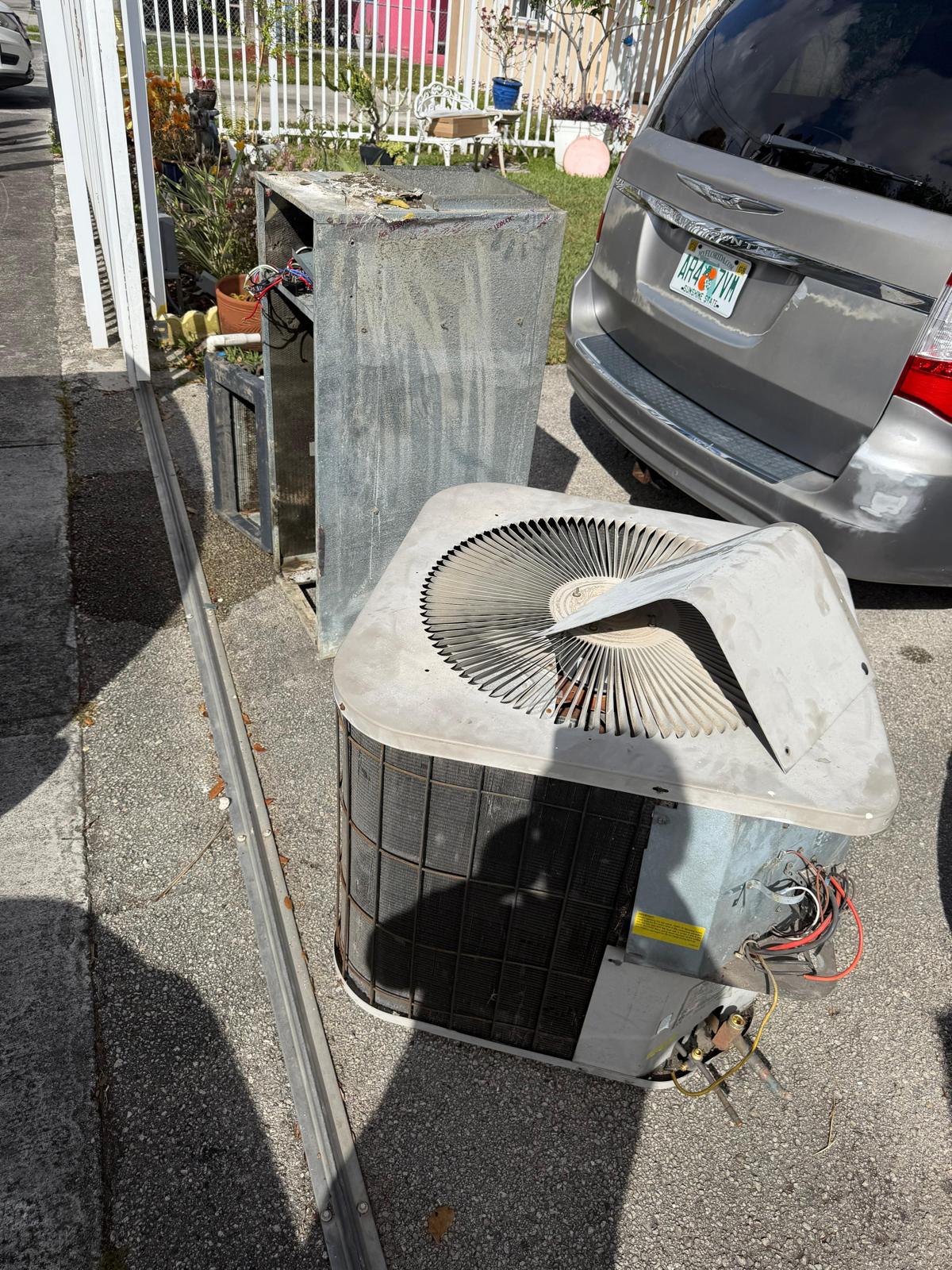
The Unseen Saboteur: Why Your AC Capacitor Fails and What It Means for Your Hollywood, FL Cooling
Let’s be blunt: most AC breakdowns in Hollywood aren’t the result of your entire system collapsing; they’re often due to a single, inexpensive component quietly failing. This truth is unsettling for many homeowners, as it implies a vulnerable point they may never have considered: the AC capacitor. In the sweltering South Florida climate, where your air conditioning unit runs relentlessly, understanding this crucial component – and why it gives up – is not just useful, it’s essential for maintaining comfort and avoiding unexpected heatwaves in your own home.
At Airus Air Services, we witness firsthand the havoc a failed capacitor can wreak, especially when the Hollywood humidity and heat index soar. This small, cylindrical device is the unsung workhorse, providing the necessary jolt of electricity to kickstart your compressor and fan motors. Without it, your AC unit might hum weakly, struggle to start, or simply refuse to cool your home, leaving you feeling the full force of a Florida summer afternoon.
The Silent Killers: Common Causes of Capacitor Failure
Capacitors are designed to withstand significant electrical stress, but even the toughest components have their limits. In a city like Hollywood, where AC units face extreme conditions, these limits are often tested daily. Here are the primary reasons these vital components give out:
1. Extreme Heat and Humidity
Perhaps the most significant factor in Hollywood is environmental stress. Your AC unit’s outdoor condenser unit is exposed to relentless sun and ambient temperatures often exceeding 90°F for months on end. Add to that our high humidity, which increases the electrical load and operational stress. These conditions accelerate the degradation of the capacitor’s dielectric fluid, leading to its eventual bulge or burst. A capacitor’s lifespan can be significantly shortened by continuous exposure to temperatures beyond its operating range, a common scenario here.
2. Age and Wear and Tear
Like any electrical component, capacitors have a finite lifespan, typically ranging from 10 to 15 years under ideal conditions. However, the heavy workload placed on AC units in South Florida often reduces this. Constant on-off cycles, characteristic of trying to maintain comfort against intense heat, contribute to electrolytic breakdown. Regular preventative AC maintenance in Hollywood can help identify aging capacitors before they fail completely.
3. Voltage Spikes and Surges
Electrical inconsistencies, whether from lightning strikes, power grid fluctuations, or even large appliances cycling on and off in your home, can send damaging voltage spikes through your AC unit. While many units have surge protectors, a direct hit or repeated smaller surges can overwhelm a capacitor, causing internal damage and premature failure. This is a