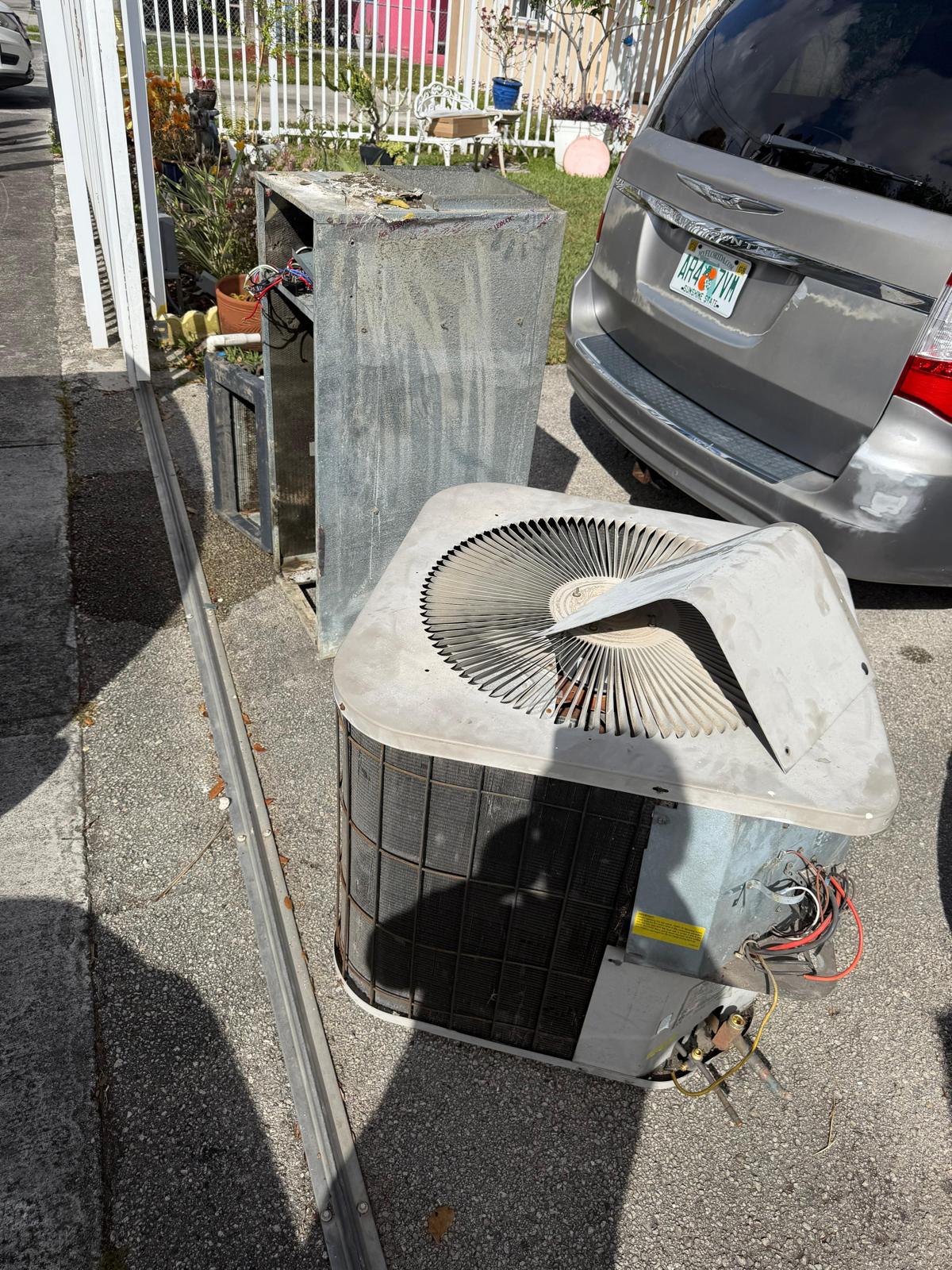
Ever walked past your outdoor AC unit in the sweltering Houston heat, expecting that familiar hum of cool relief, only to find it… well, frozen solid? Like a frosty alien artifact dropped into your backyard from some colder dimension, an ice-covered AC unit is certainly a sight to behold, but usually spells trouble for your indoor comfort. Before the days of modern air conditioning, folks just suffered through Houston’s legendary humidity. The invention of residential AC, however, brought a new kind of chill – and sometimes, a literal freeze-up!
Here at Airus Air Services, while we keep the Hollywood, FL, sunshine cool and comfortable, we know HVAC problems don’t respect city limits. The physics of air conditioning are universal, and a frozen AC in the Bayou City demands the same expert understanding as anywhere else. So, let’s unfreeze the mystery of why your AC might be acting like an ice sculpture, and what you can do about it.
The Icy Origins: Why Does Your AC Freeze Anyway?
At its core, your AC works by circulating refrigerant that absorbs heat from your indoor air, then releases it outside. The indoor component, the evaporator coil, gets really cold as it pulls heat out of your home. Normally, this process keeps everything cool without turning your unit into a winter wonderland. The “ice block” effect happens when the evaporator coil gets too cold, causing moisture in the air (and there’s plenty of that in Houston!) to condense and freeze onto it. This isn’t just a minor inconvenience; a frozen coil significantly reduces your AC’s efficiency and can lead to costly repairs if ignored.
Before the Freeze: Common Causes & Their Chilling Effects
Understanding what triggers the deep freeze is your first step towards a solution. Think of these as the culprits behind your AC’s unexpected transformation into an iceberg. The good news is, many are preventable!
Low Refrigerant: The AC’s “Running on Empty” Syndrome
Refrigerant isn’t a fuel that gets “used up”; it circulates in a closed loop. If your system is low on refrigerant, it means there’s a leak. Less refrigerant means the pressure drops, causing the evaporator coil to get excessively cold – often below freezing. This isn’t just bad for your comfort; it’s terrible for your system’s longevity. A tell-tale sign of a leak might be warmer air coming from vents or strange hissing sounds. For expert advice on diagnosing leaks in your system, our technicians at Airus Air Services in Houston are always ready to help residents dealing with this common issue.
Blocked Airflow: When Your AC Can’t Breathe
Your AC needs to circulate a proper volume of air across the evaporator coil to function correctly. If airflow is restricted, the coil can’t absorb enough heat from the air, causing its temperature to drop dangerously low. This is arguably the most common cause of freezing, especially in the humid climate of cities like Houston. The usual suspects? A filthy air filter or blocked return air vents. Imagine trying to run a marathon while holding your breath – that’s your AC with poor airflow.
Dirty Evaporator Coils: Grime-Induced Frostbite
Even if your air filter is clean, years of operation can lead to dirt and grime accumulating directly on the evaporator coil. This layer of gunk acts as an insulator, preventing the coil from properly absorbing heat from your indoor air. The coil then struggles to do its job, gets colder and colder, and eventually, moisture freezes onto it. This is why regular professional cleaning is so crucial for peak performance. Even our clients in Airus Air Services in