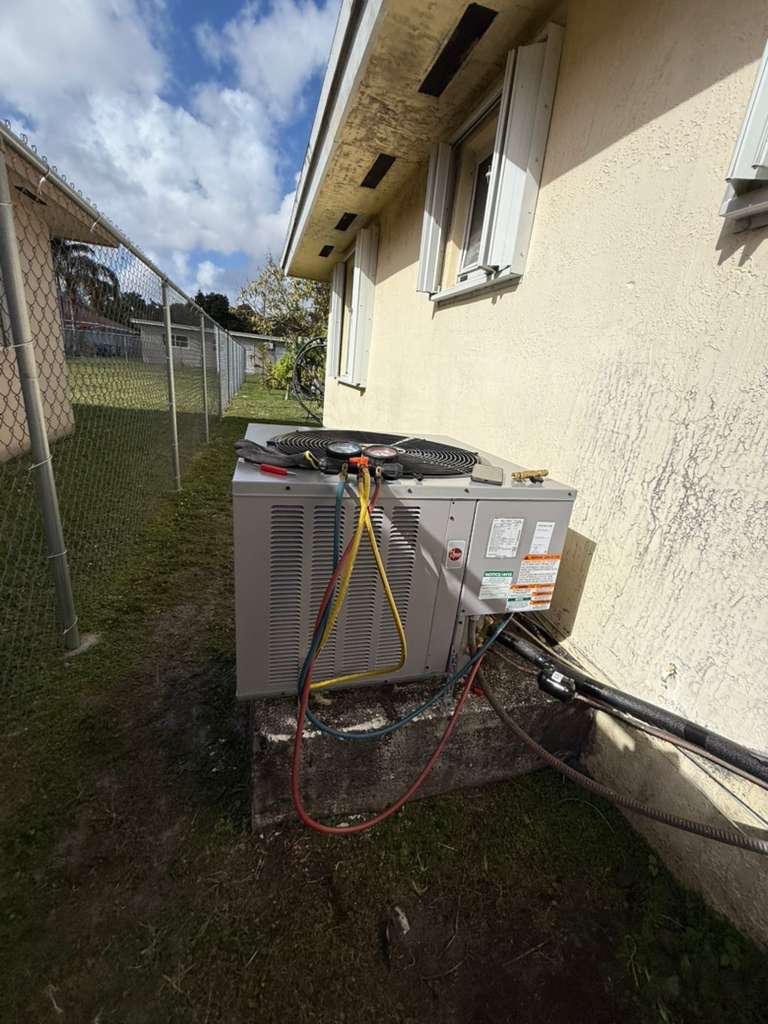
Did you know that the smooth, consistent operation of your AC unit, especially here in Hollywood, FL, hinges significantly on a small, often overlooked electrical component called the capacitor? If your air conditioner’s outdoor fan is repeatedly starting and stopping – cycling on for a few minutes, then shutting off, only to restart shortly after – it’s a strong indicator of a failing capacitor. This isn’t just an annoyance; it’s a red flag signaling stress on your entire HVAC system, potentially leading to more extensive and costly breakdowns.
At Airus Air Services, we understand the critical role an efficient AC plays in South Florida’s relentless heat and humidity. This isn’t a minor hiccup; it’s a symptom that demands immediate attention. Let’s dissect the difference between a properly functioning AC fan and one struggling due to a faulty capacitor.
Understanding Your AC Fan: Normal vs. Problematic Cycles
A properly functioning AC unit operates in predictable cycles designed for optimal cooling and energy efficiency. When your thermostat signals for cooling, the compressor and outdoor fan should activate simultaneously, run for a sustained period, and then shut off once the desired temperature is reached. This cycle might last anywhere from 10 to 20 minutes, depending on the outside temperature and your home’s insulation.
In stark contrast, a fan that keeps starting and stopping exhibits what HVAC professionals call “short cycling.” Instead of delivering a long, consistent cool, it kicks on and off erratically. You might hear the condenser unit outside click, the fan spin up for a brief minute or two, then groan to a halt, only to repeat this sequence within a short timeframe. This rapid, inefficient operation not only fails to cool your home effectively but also significantly increases wear and tear on crucial components, including the compressor – the heart of your AC system.
The Core Culprit: What a Healthy AC Capacitor Does
Think of your AC capacitor as a temporary battery or a “turbo booster” for your air conditioner’s electric motors. Its primary function is to store and discharge an electrical charge, providing the necessary jolt of power to start the compressor and the outdoor fan motor. There are typically two types of capacitors in an outdoor unit: a start capacitor (for the initial surge) and a run capacitor (for continuous operation and efficiency once started). In the humid Hollywood climate, these components work overtime.
A healthy capacitor ensures that both the compressor and fan receive the adequate voltage and torque needed to overcome initial inertia and maintain efficient rotation. Without this initial boost, the motors struggle. It’s like trying to push a heavy car uphill without enough momentum – it stalls repeatedly, putting immense strain on the engine. For context, industry data suggests that capacitors account for approximately 15-20% of all AC no-start or poor performance calls, making them one of the most common failure points.
Signs of a Failing Capacitor: What to Look For
Identifying a failing capacitor early can save you from a complete system breakdown and costly emergency AC repairs. Beyond the fan repeatedly starting and stopping, here are other tell-tale signs:
- Humming Noise from Outdoor Unit: If you hear a persistent humming sound from your outdoor unit without the fan blades turning, it’s often the motor attempting to start but lacking the necessary electrical boost.
- Reduced Cooling Performance: Your AC might be running, but the air coming from the vents isn’t as cold as it should be, or your home struggles to reach the set temperature.
- Slow Fan Startup: The outdoor fan might spin up sluggishly, or require a gentle nudge to get going (a dangerous practice to attempt yourself!).
- Increased Energy Bills: An AC unit that’s short cycling or struggling to start uses more electricity inefficiently, reflecting in higher utility costs – a burden no Hollywood homeowner needs.
- Bulging or Leaking Capacitor: While this requires a professional inspection, a physically damaged capacitor (swollen top, leaking fluid) is a clear sign of failure.
Weak Capacitor vs. Completely Failed Capacitor: A Crucial Distinction
It’s important to understand the difference between a capacitor that is weak and one that has completely failed. A weak capacitor is still functioning but is unable to hold or deliver its full rated electrical charge. This leads to the intermittent starting and stopping we’ve discussed. The fan or compressor might run, but it’s struggling, overheating, and performing inefficiently. This state often precedes total failure, and continued operation with a weak capacitor places undue stress on your entire system.
A completely failed capacitor, on the other hand, means it can no longer store or discharge any electrical charge whatsoever. In this scenario, the outdoor fan and/or compressor simply won’t start at all, often resulting in just a hum or complete silence from the unit. The distinction is critical because while a weak capacitor might allow some intermittent cooling, a totally dead one means zero operation. Addressing a weak capacitor promptly through AC maintenance services here in Hollywood can prevent the more damaging consequences of total failure.
The Hollywood, FL Factor: Why Capacitors Fail Here
Living in Hollywood, FL, means your AC unit works harder than in many other parts of the country. The constant battle against high temperatures, persistent humidity, and salt-laden air contributes significantly to the wear and tear of electrical components like capacitors. Extreme heat causes the dielectric material inside the capacitor to degrade faster, reducing its ability to store charge. Moreover, power surges and fluctuations, common during Florida’s intense thunderstorm season, can also stress and eventually damage capacitors.
Our experience at Airus Air Services, much like the expertise our counterparts at Airus Air Services in Houston bring to their humid climate, consistently shows that annual preventative checks are invaluable. Regularly assessing these components can proactively identify degradation before it leads to a complete system failure. Many of the same climatic challenges are faced by homeowners across the country, from our team delivering Airus Air Services in Los Angeles to our specialists in cities like Airus Air Services in Dallas.
Professional Diagnosis and Repair: Why DIY Can Backfire
While the concept of replacing an AC capacitor might seem straightforward to some, it’s a task best left to certified HVAC professionals. Capacitors can store a lethal electrical charge even when the unit is turned off, posing a serious electrocution risk. Furthermore, choosing the wrong replacement capacitor (incorrect MFD rating, voltage) can cause further damage to your compressor or fan motor, turning a simple repair into a much more expensive problem, potentially requiring emergency AC repair.
A professional technician from Airus Air Services will safely discharge the existing capacitor, accurately diagnose the issue using specialized tools, and install the correct, high-quality replacement part, ensuring proper function and longevity. We guarantee proper component matching, which is crucial for optimal performance and extends the life of your entire HVAC system, much like ensuring proper AC installation solutions.
FAQs About AC Fan Cycling and Capacitors
Q1: Is it dangerous to operate my AC with a failing capacitor?
A1: Yes. A failing capacitor causes the fan and compressor motors to draw excessive current, leading to overheating and significant damage. This can reduce the lifespan of your expensive compressor and increase the risk of electrical hazards.
Q2: How long do AC capacitors typically last?
A2: AC capacitors typically last between 5-10 years. However, factors like extreme heat, humidity (common in Hollywood, FL), power surges, and frequent AC cycling can significantly shorten their lifespan.
Q3: Can a failing capacitor affect my indoor air quality?
A3: While a capacitor directly affects motor function, an inefficient or struggling AC unit may lead to poor humidity control. High indoor humidity, if not addressed by an efficient AC, can foster mold and mildew growth, indirectly impacting indoor air quality.
Q4: What’s the typical cost to replace an AC capacitor?
A4: The cost can vary based on the capacitor type, brand, and labor rates. Generally, it’s one of the more affordable AC repairs, significantly less expensive than replacing a compressor or an entire unit, which makes prompt attention critical.
Q5: Can I prevent capacitor failure?
A5: Regular professional AC maintenance is your best defense. During these visits, technicians can test the capacitor’s microfarad (µF) rating and voltage, identifying signs of weakness before total failure. Keeping your outdoor unit clean also helps prevent overheating that contributes to capacitor degradation.
Q6: Why does my fan just hum and not spin?
A6: A humming sound without the fan spinning is a classic symptom of a failed fan capacitor. The motor is receiving power but lacks the starting boost required to overcome inertia and begin rotation.
Q7: Can a bad capacitor cause my AC to trip the breaker?
A7: Yes, absolutely. If a capacitor fails catastrophically (e.g., shorts internally) or causes the motors to draw excessive amperage, it can certainly trip your circuit breaker as a safety measure to prevent electrical damage or fire.
Don’t let a struggling AC unit compromise your comfort or lead to more extensive damage. If you notice your AC fan repeatedly starting and stopping or any other signs of an issue, it’s time to call the experts. For reliable HVAC service and swift capacitor replacement in Hollywood, FL, trust Airus Air Services. Contact us today at (954) 627-1752 to schedule an inspection and ensure your home stays